
Power Problems Nobody Is Prepared For
Anyone who has run a commercial renovation knows that, usually, several issues will arise during the job that cause difficulty to the contractors. Some things will be difficult to predict, like how fast walls will be demolished, delays in deliveries, and weather disruptions. During the chaotic renovation, electric power must always be reliable and available. Tools, lights, and security systems need power. Half the crew’s productivity also depends on power. This is why more contractors have been rethinking how power is handled at the job site. So, instead of running extension cords to the nearest outlet, contractors do something else.
Why Construction Sites Need Industrial Power
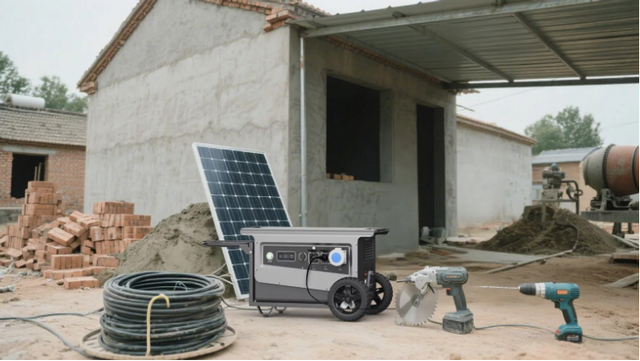
A portable, reliable, industrial power station is used in the construction site to satisfy the needs of the contractors. Unpredictable, messy construction sites have dust, and exposed wiring, and electric systems that are incomplete, and have heavy equipment that is moved around all the time. A standard power setup (or worse, a neglected power generator) was definitely not built to stand that level of activity. An industrial-grade power setup was built, from the ground up, for construction sites. It has a rugged casing, a higher output capacity, and the capability to power several tools and devices simultaneously without the risk of tripping or overheating. As a contractor, power source downtime during the construction of your site is very costly, because your crew is being paid.
Water Is Almost Guaranteed On Renovation Sites
There is an inescapable presence of water on most renovation sites. Roofs are opened up. Plumbing is disassembled. In the middle of all of this, the rain can come in the new openings, or even the old ones. On jobs that don’t involve opening the roof or walls, splashes and spills of water can come from the mixing of concrete, power washing, or even just simple cleaning. Moisture and power equipment are an extremely bad combination. The danger is exacerbated when an electrical outlet is exposed and in contact with standing water. This condition can cause an injury, and can potentially shut down the whole project.
Active Construction Sites are Dirty
This is what makes commercial renovation difficult. Unlike a finished office, commercial renovation is a construction site that can be opened to the elements at any time. The equipment provides power to the tools that have to be built to accommodate the elements. The building can be damaged and not show the effects of construction for a long time, like when a unit short-circuits after a rainy construction day due to moisture corroding a connection.
Inspections, Compliance, and Insurance
The difficulties presented are compounded when you consider the insurance. Most teams ignore this until it becomes a problem. Commercial renovation sites are subject to inspections. Commercial job sites are subject to safety inspections, and depending on the region, there are specific codes around electrical equipment used in wet or exposed conditions. Showing up with gear that’s rated for outdoor and moisture exposure isn’t just smart planning, it can be the difference between passing an inspection smoothly and getting hit with a stop-work order. Contractors who’ve been burned by this once tend to never make that mistake twice.
Delays Cost More Than Just Time
Beyond safety, there’s a practical business case here too. Renovation timelines are tight, and clients don’t care why a project is behind schedule; they just want it finished. If your power source fails because of rain or a wet subfloor, you’re not just losing a day, you’re losing trust. Clients remember delays, and word travels fast in the commercial construction world. Investing in equipment that can handle whatever the site throws at it isn’t an extra expense; it’s basic risk management that protects your reputation as much as your timeline.
The Equipment Has Come a Long Way
It’s also worth mentioning how much these units have evolved over the past few years. They’re not the bulky, noisy generators people picture when they hear “job site power.” Many modern industrial units are quieter, more fuel-efficient or fully electric, and significantly easier to move around a site than older models. That matters when you’re working in occupied commercial buildings where noise restrictions apply, or in tight urban locations where a generator running all day would draw complaints from neighboring businesses. The technology has caught up with the actual needs of renovation work, not just raw output.
Durability Matters Beyond Just Water Resistance
Durability is another factor that often gets overlooked until it’s too late. Renovation sites are hard on equipment in general dust, debris, temperature swings, and constant movement from one part of the building to another. A power unit that’s built with reinforced housing and sealed components isn’t just protecting against water; it’s protecting against the general wear and tear of daily site use. That kind of build quality extends the life of the equipment significantly, which matters when you’re running multiple projects a year and don’t want to be replacing gear every few months.
What To Look For When Choosing a Unit
It is more effective to consider equipment that is explicitly marketed as a waterproof power station for your project, rather than looking at standard equipment and assuming it will be “good enough.” IP ratings indicate the different levels of moisture and dust protection rating certification a unit may offer, and it is common for models that may appear similar to all offer different levels of IP ratings. In the absence of an IP rating you cannot take a specification sheet’s word for it either. You need to be more critical and consider the exposure testing of the equipment, warranty terms, and testimonies of prior commercial clients that have employed the equipment for the same or similar tasks. Your project will benefit from the additional queries you include during the procurement process.
The Bottom Line
The power of a commercial site renovation is the only thing you can control. Condition of the site, and especially the mess, is unpredictable, and so is the commercial renovation. Moisture, dust, and debris are unavoidable site conditions that good commercial equipment will account for. You will be confronted with repair costs and a need for equipment to be routinely replaced far less over the duration of the project when you take a site condition focused approach to equipment procurement. It’s not the most fun purchasing decision, but it is almost certain to save you renovation costs. It is prudent to review the power equipment since the last renovation was held.

